If someone told me I could time-travel back to medieval Europe without leaving New York City, I’d probably laugh. But honestly? That’s basically what happened when we visited The Met Cloisters. Perched high on a hill in Fort Tryon Park, this place is like nothing else in Manhattan—and I mean that in the absolute best way possible.

Getting There (And Those Views Though!)
The Cloisters sits at one of the highest points in Manhattan, overlooking the Hudson River with jaw-dropping views of the New Jersey Palisades. We took the subway up to the northern tip of the island, and let me tell you, the trek was totally worth it. The museum itself looks like an actual medieval monastery—complete with stone walls, towers, and ramparts—but here’s the wild part: it was built in the 1930s. An unlikely duo made it happen: sculptor George Grey Barnard, who had a thing for collecting medieval architectural pieces in France, and John D. Rockefeller Jr., who had a thing for massive philanthropic projects. Together, they created this incredible place that opened its doors in 1938.
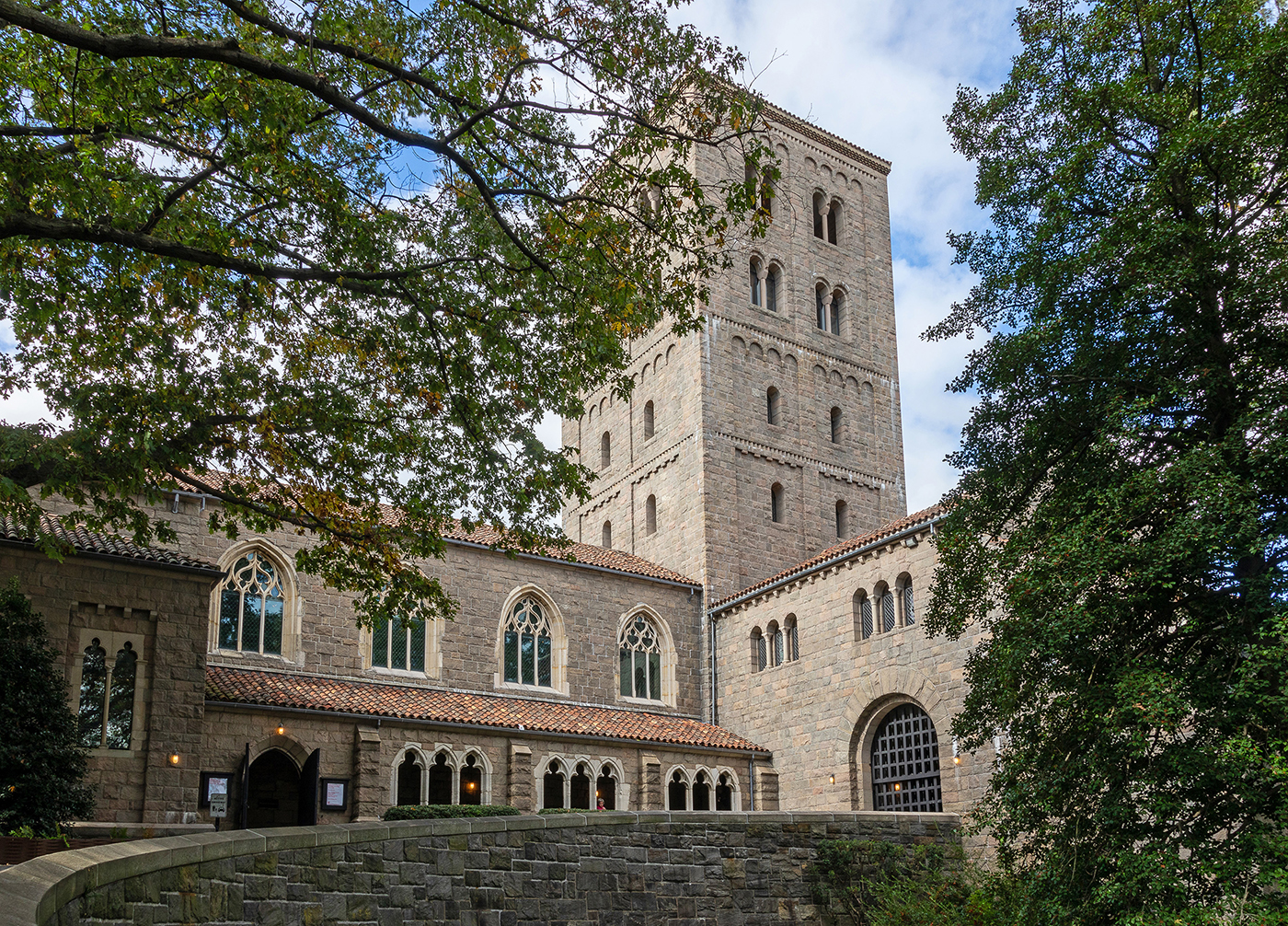
Exterior view of The Met Cloisters museum in Fort Tryon Park, showcasing its medieval-style stone architecture and tower wbmelvin
The Guided Tour: Medieval 101
We started our visit with a guided tour, which was super helpful because—let’s be honest—there’s a LOT to take in here. The museum houses about 5,000 works of medieval art and architecture, all European and mostly from the 12th through 15th centuries. Our guide walked us through the layout, explaining how the building itself was designed by architect Charles Collens to evoke medieval European monastic life without being a straight-up copy of any one building. It’s like medieval architecture fan fiction, but in the best way.
The building incorporates actual pieces from four different French medieval cloisters—Cuxa, Saint-Guilhem, Bonnefont, and Trie—plus various chapels and chapter houses. These were literally dismantled stone by stone in Europe and shipped to New York. The granite for the new external work came from Connecticut, and limestone from Italy helped blend everything together seamlessly.
The Crown Jewels: Must-See Masterpieces
The Unicorn Tapestries
Okay, so the Unicorn Tapestries are basically the rock stars of The Cloisters. These seven massive wall hangings—each at least 12 feet high and up to 14 feet wide—tell the story of a unicorn hunt. They were woven around 1495-1505 in the Netherlands, probably designed in Paris and made in Brussels. The detail is insane: you can see individual flowers, the expressions on the hunters’ faces, and even the reflections in water.
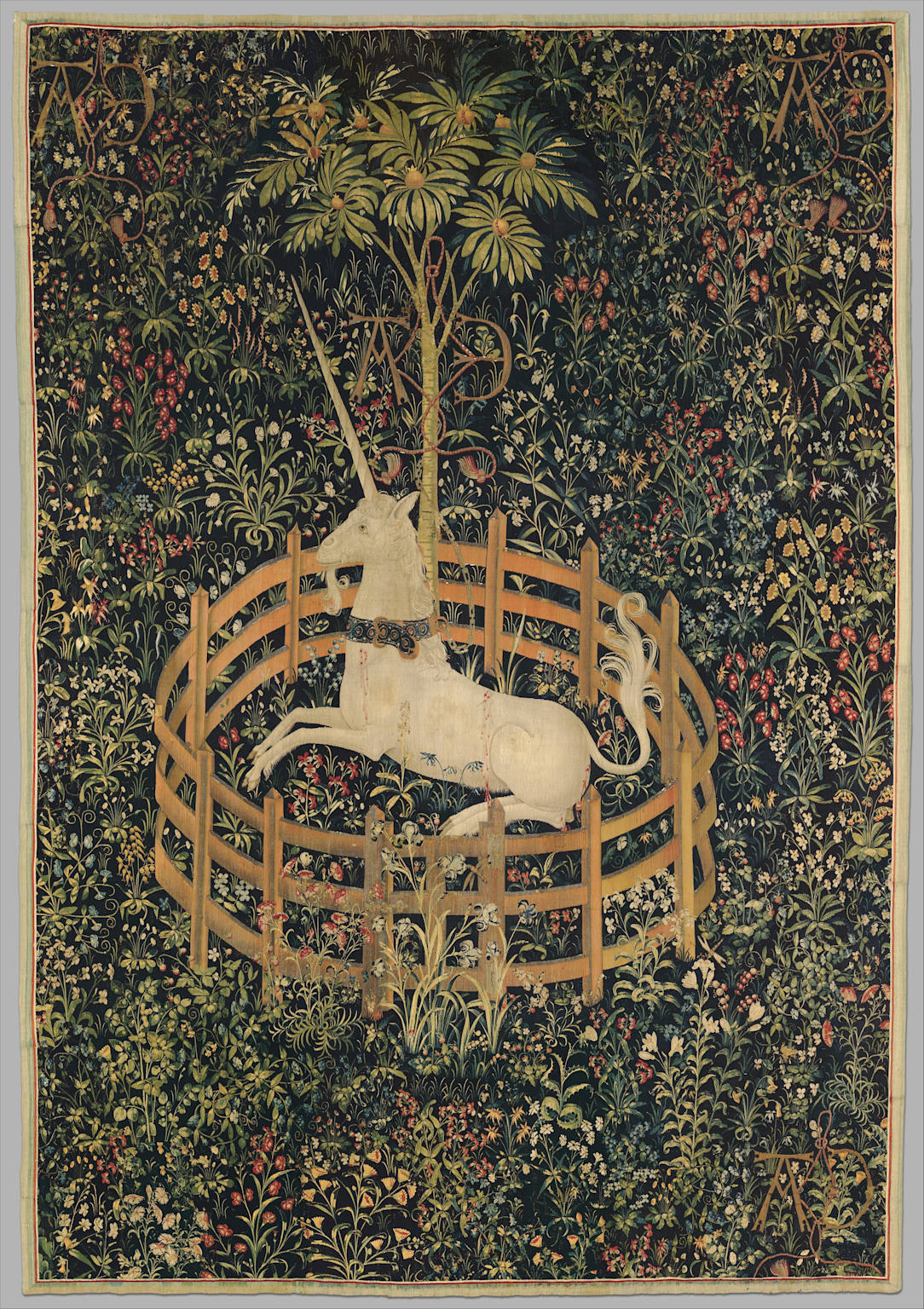
The Unicorn in Captivity tapestry from The Met Cloisters’ Unicorn Tapestries series, showcasing medieval art and symbolism wikipedia
The colors are still ridiculously vibrant after 500+ years, thanks to natural dyes from plants like weld (yellow), madder (red), and woad (blue). The most famous one is definitely “The Unicorn in Captivity,” where the unicorn is shown alive again, chained to a tree in a garden with pomegranate juice (not blood!) dripping on its white coat. It’s been interpreted as everything from a symbol of Christ to a happy groom bonded by marriage—medieval symbolism was all about that sacred-meets-secular vibe.
There’s even this mysterious “AE” monogram that appears on every tapestry, and nobody knows for sure who it represents. The whole series was looted during the French Revolution, rediscovered in a barn in the 1850s, and eventually donated to The Met by Rockefeller. Talk about a wild journey!
The Mérode Altarpiece
The Mérode Altarpiece (also called the Annunciation Triptych) is another showstopper. Painted around 1427-32 by the workshop of Robert Campin, this triptych shows the moment just before the Archangel Gabriel tells Mary she’s going to be the mother of Jesus. What makes it special is the incredible use of oil paints—a relatively new invention at the time—which allowed for richer colors and more realistic light effects.

The painting is packed with symbolism. In the center panel, Mary is reading, totally unaware that Gabriel just swooped in. You can even see the Holy Spirit as a tiny figure with a cross, flying in through the window on golden rays. The left panel shows the donors (the people who commissioned the painting) kneeling outside, while the right panel depicts Joseph in his carpenter’s workshop making mousetraps. Those aren’t just any mousetraps, though—they’re “Devil’s mousetraps,” referencing a medieval belief that the Incarnation was God’s way of trapping the devil. Pretty metal for a religious painting!
The Cloisters Cross
Then there’s the Cloisters Cross, which is basically a masterclass in medieval craftsmanship. This walrus ivory cross from around 1150-60 is carved with 92 figures and 98 inscriptions, all packed onto a cross that’s about 22 inches tall. Both sides are intricately decorated with scenes from Jesus’s death and Resurrection, plus a bunch of Old Testament prophets. The cross is carved to look like a tree branch, referencing the Tree of Life.

It’s considered one of the great treasures of the Middle Ages, though its exact origins are a bit murky—it appeared in a private collection after World War II and was acquired by The Met in 1963. Most scholars agree it’s English, possibly from the abbey of Bury St. Edmunds, but there’s still some debate.
The Architecture: A Stone-by-Stone Marvel
The Cloisters Themselves
After the tour, we wandered on our own and really got to appreciate the building. The Cuxa Cloister is probably the most Instagram-worthy spot. It’s built from pink marble streaked with white, all from a quarry near the original monastery in the Pyrenees. The columns have these wildly varied capitals—some simple and geometric, others carved with fantastic animals, mermaids holding their tails, and lions devouring their own forelegs. Medieval artists were definitely not playing it safe with the imagery!
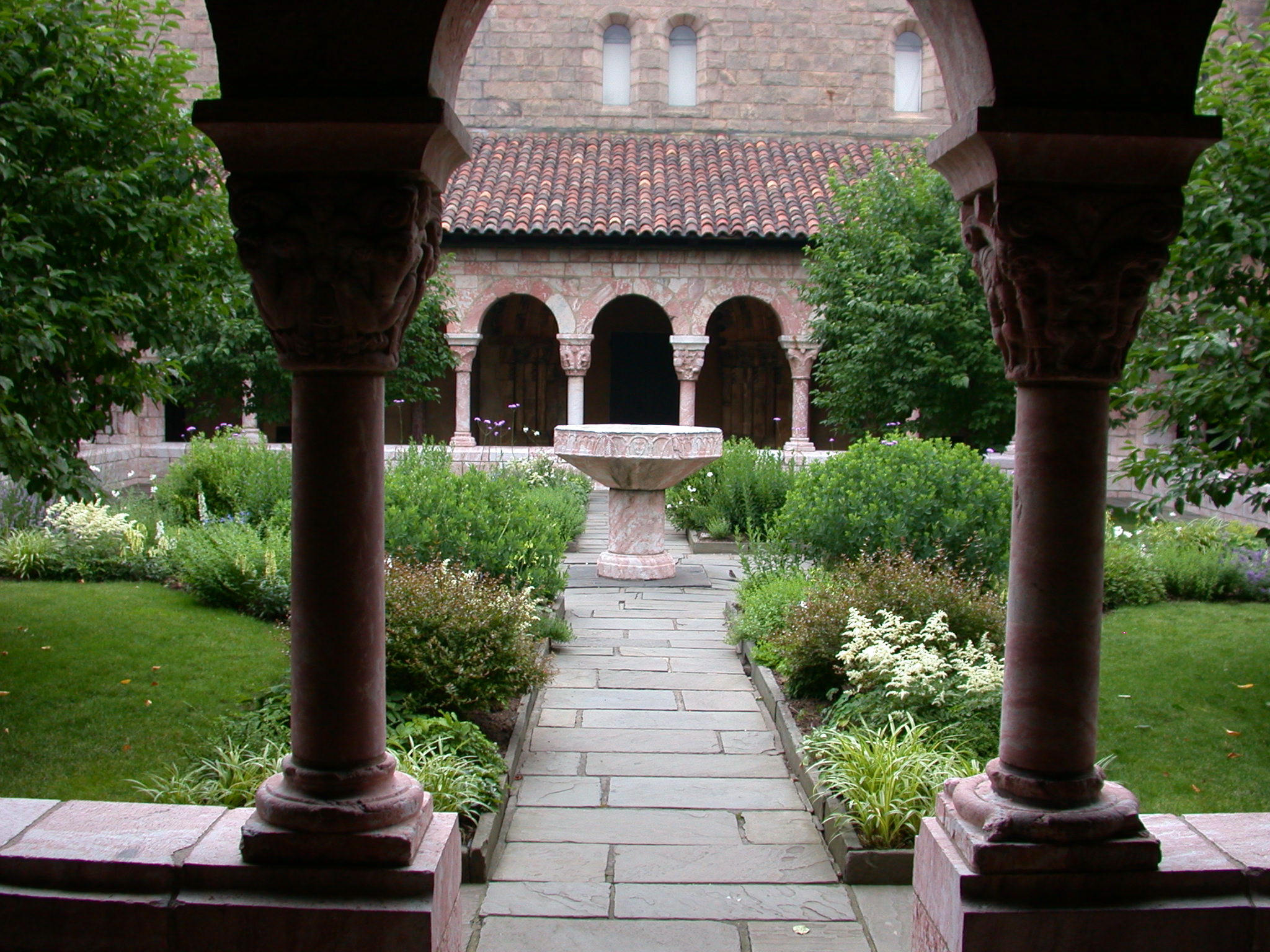
The Cuxa Cloister garden with stone columns, central fountain, and medieval architecture at The Met Cloisters blog.metmuseum
The cloister surrounds a garden with crossed paths, a central fountain, and pollarded crab apple trees. In winter, the walkways are glassed in and filled with tender plants like date palms, oranges, rosemary, and bay—basically a medieval conservatory.
The Saint-Guilhem Cloister features fragments from a Benedictine abbey in southern France, dating from the late 12th to early 13th century. The capitals here are sheathed with curling acanthus leaves and decorated with vine motifs, birds, and even a “Hell” capital showing Satan and sinners being led to the mouth of Hell. Cheerful stuff!
The Chapels
The Fuentidueña Chapel is the largest room in the museum. This 12th-century Romanesque apse came from the church of San Martín in Fuentidueña, Spain, and was dismantled into nearly 3,300 stone pieces, numbered, crated, shipped to New York, and reassembled between 1958 and 1961. The Spanish government and even the Pope had to sign off on the deal. The chapel features a stunning fresco of the Virgin and Child in the apse, plus massive oak doors adorned with animal sculptures.
The Gothic Chapel showcases the transition to later medieval style, with spectacular 14th-century stained glass windows from Austria, ribbed vaults, and buttresses. The Langon Chapel, on the building’s west side, contains stonework from a 12th-century church in southwestern France and features beautiful carvings of the Coronation of the Virgin.
The Boppard Room
The Boppard Room is named after six monumental stained glass windows from the Carmelite church of Saint Severinus in Boppard, Germany, dating from 1444. These windows are over 12 feet tall and were designed to create a dramatic zone of light stretching more than 30 feet from sill to vault. The collection includes around 300 stained glass panels total, characterized by vivid colors and often abstract designs. The way light filters through these medieval windows is genuinely magical—we must have spent 20 minutes just staring at them.


The Gardens: A Medieval Green Thumb’s Dream
The gardens at The Cloisters deserve their own section because they’re AMAZING. Each garden is planted with species that were actually grown in the Middle Ages, based on historical records and archaeological evidence.
The Cuxa Cloister Garden is the most ornamental, with a typical medieval plan featuring a fountain at the center of crossed paths dividing the garden into quadrants. The borders are planted with herbs and flowers chosen for beauty and fragrance, providing color from early spring until late fall.
The Bonnefont Cloister Herb Garden is where things get really nerdy in the best way. This garden holds one of the most specialized plant collections in the world, with over 250 species based on a 9th-century edict by Emperor Charlemagne listing 89 plants to be grown on his estates. The plants are grouped and labeled by their medieval uses: cooking, medicine, art, industry, housekeeping, or magic. Basically every plant had multiple purposes, and virtually all were believed to have medicinal value. The raised beds, wattle fences, and central wellhead are all features depicted in medieval sources.
From the Bonnefont Garden, you can access the Orchard, which includes lady apples, medlar, quince, currants, and elderberries—all medieval fruits. The ground underneath is planted as a flowering meadow with spring bulbs that naturalize over time. During our visit, we caught a Garden Tour (they run daily from April through October), and the guide explained how medieval plants served medicinal, artistic, and even magical purposes. Wild stuff!

The Overall Experience
Honestly, wandering through The Cloisters after the guided tour felt like stepping into another world. The dim lighting, the stone archways, the scent of herbs drifting in from the gardens—it all comes together to create this incredibly immersive experience. The building manages to be both a museum and a work of art itself, with that fuzzy line between the collection and the architecture housing it.
The museum averages about 300,000 visitors a year, which is honestly surprising because it feels like a hidden gem. Maybe it’s because it’s so far uptown, or maybe people just don’t realize it exists. Either way, it’s way less crowded than the main Met on Fifth Avenue, which made it perfect for lingering in front of our favorite pieces without feeling rushed.youtubeiloveny
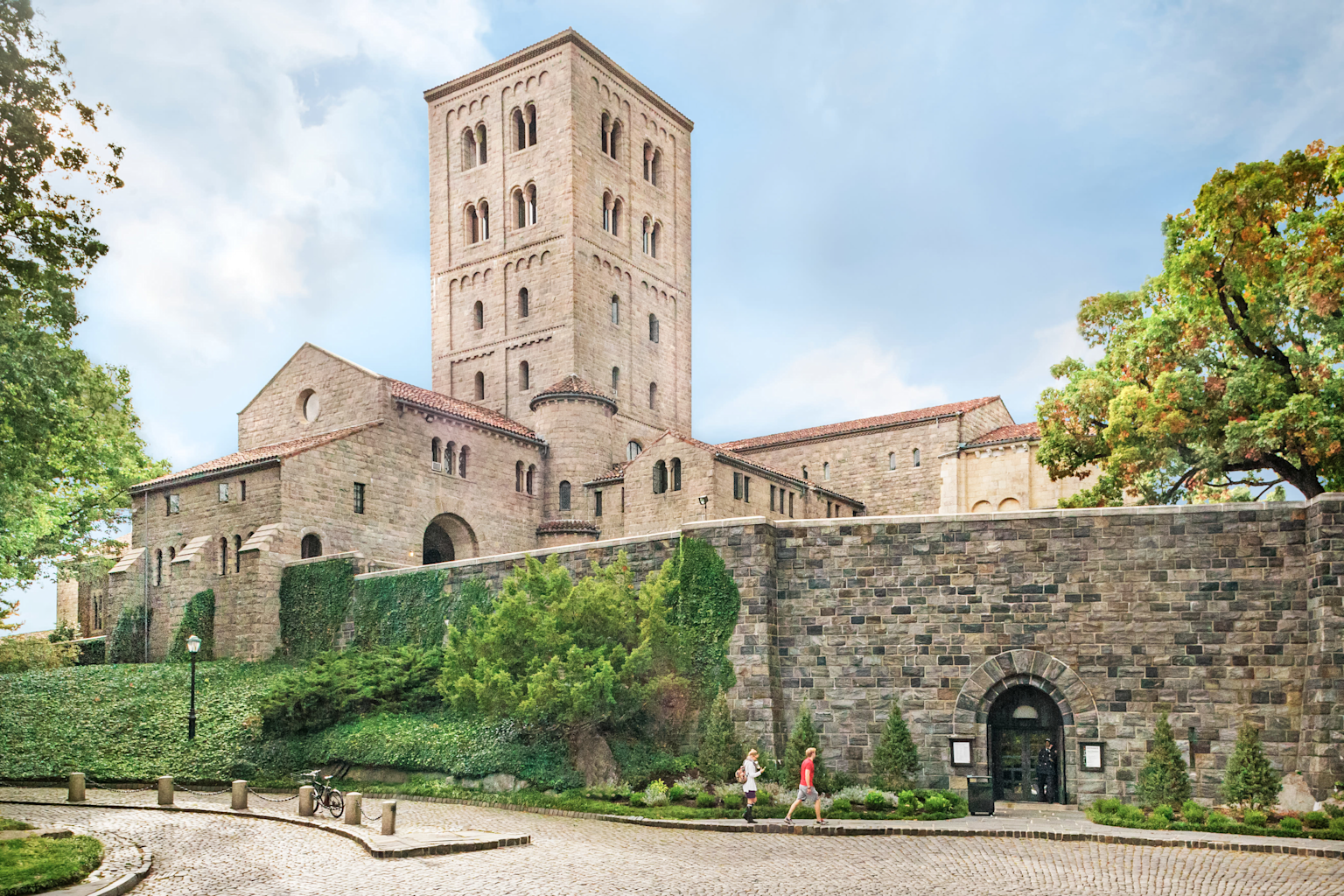
Exterior view of The Met Cloisters museum building in Fort Tryon Park, showcasing its medieval stone architecture and surrounding greenery iloveny
Final Thoughts
If you’re in New York and want a break from the usual tourist hustle, The Cloisters is an absolute must. It’s a quiet, tranquil space that feels like a retreat from the city—even though you’re technically still in Manhattan. The combination of incredible medieval art, authentic architectural elements, and those stunning Hudson River views makes it unlike anywhere else in America.
Plus, where else can you see a unicorn being hunted through a flowering forest, a Virgin Mary getting surprise-visited by an angel, and 92 tiny figures carved into walrus ivory, all in one afternoon? The Middle Ages might have been rough to actually live through, but experiencing their art and architecture like this? Absolutely worth the subway ride uptown.